Japan Travel Diary: Kyoto and Dotonbori

Japan Travel Diary: Kyoto and Dotonbori

November 6, 2014

I woke up at 5 a.m. to get ready for our first day touring Japan.

We surprisingly were able to leave the hotel at our agreed time of 8 a.m. And since we had Pupuru now, we could finally use Google Maps to navigate our 10-minute walk to Osaka Station.

The station was bustling with people. The commuters walked as if following a current known only to them. We gawked for a few minutes before we finally walked through the surge of people.

I’ve been on trains before, but riding one in Japan felt different. I guess it’s because trains are almost a Japanese cultural symbol; one can read about them in their literature and see it in their movies.
DSC00082
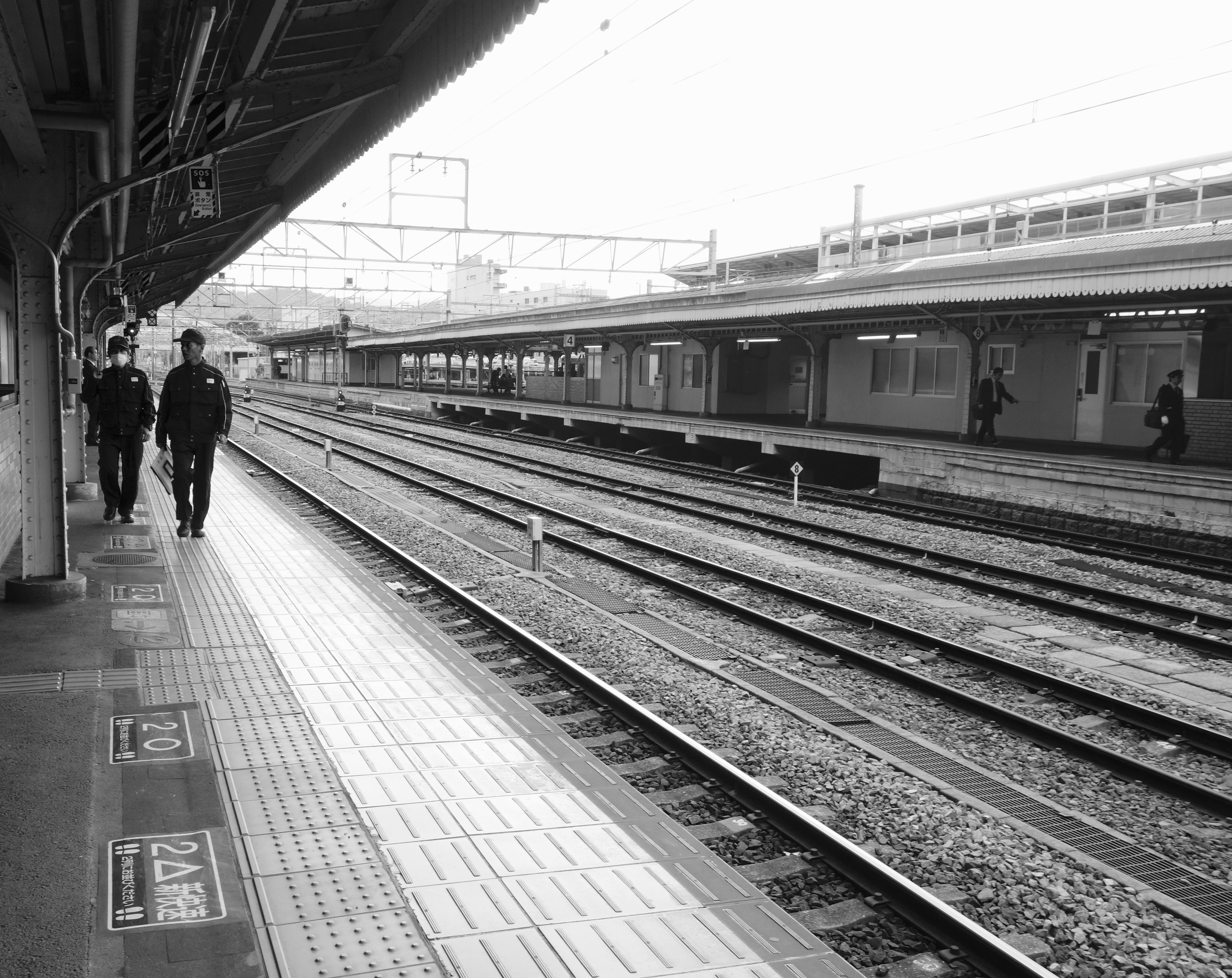
Inari Station

We had to change train lines to reach Kyoto. But since we didn’t have prepaid cards—we opted to buy single journey tickets for every train ride—we didn’t know what to do at first. At the station where the lines interchanged, we found a ticketing machine that commuters inserted their ticket into and selected a station. The machine then ejected a new ticket. We did the same thing and out came the same ticket we inserted. We concluded that we weren’t supposed to do this at the interchange. So we hopped on the train bound for Kyoto and found a similar ticketing machine at our exit station. It worked this time around. Our brains still worked! And of course we were amazed at the technology.

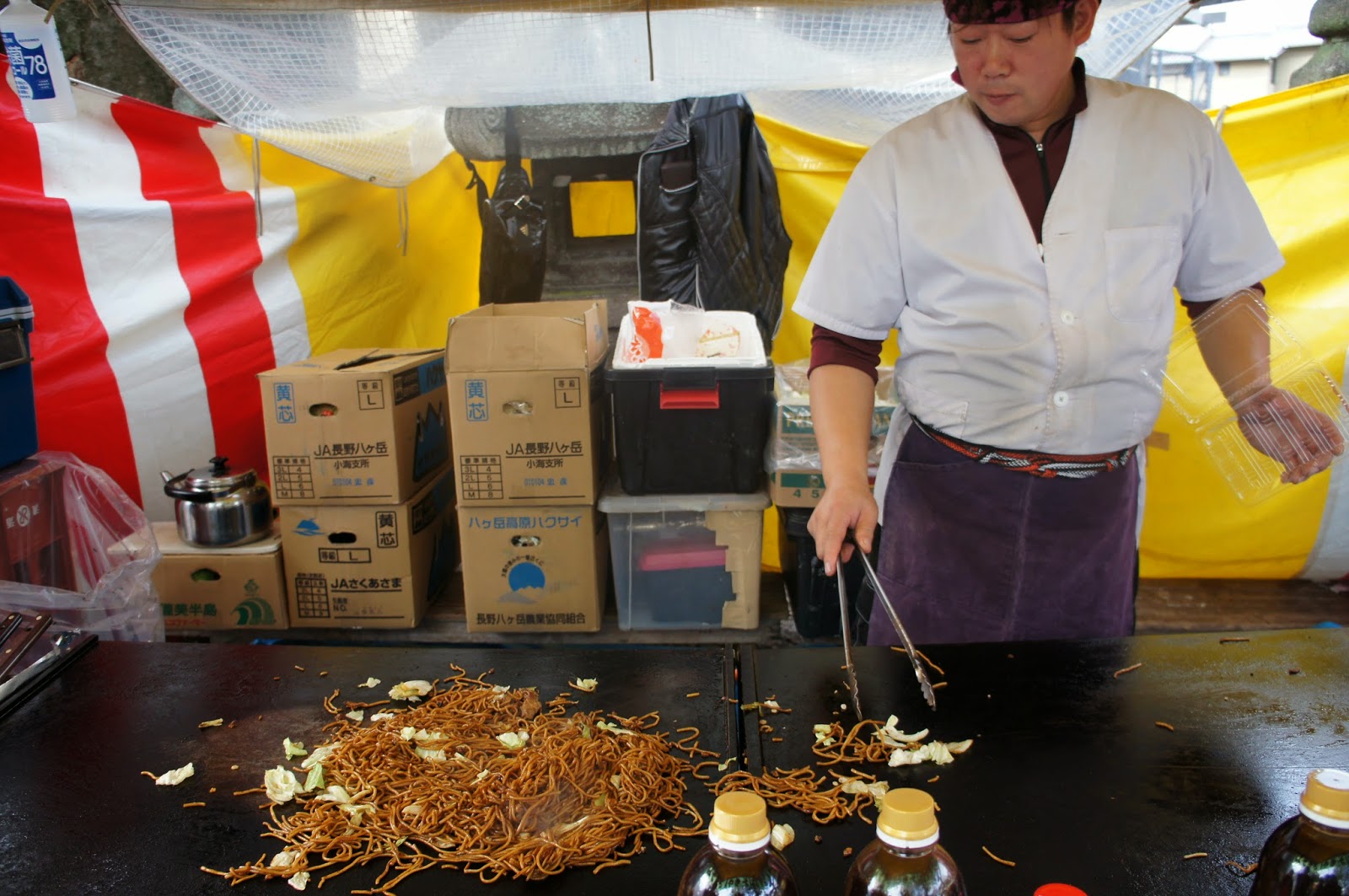
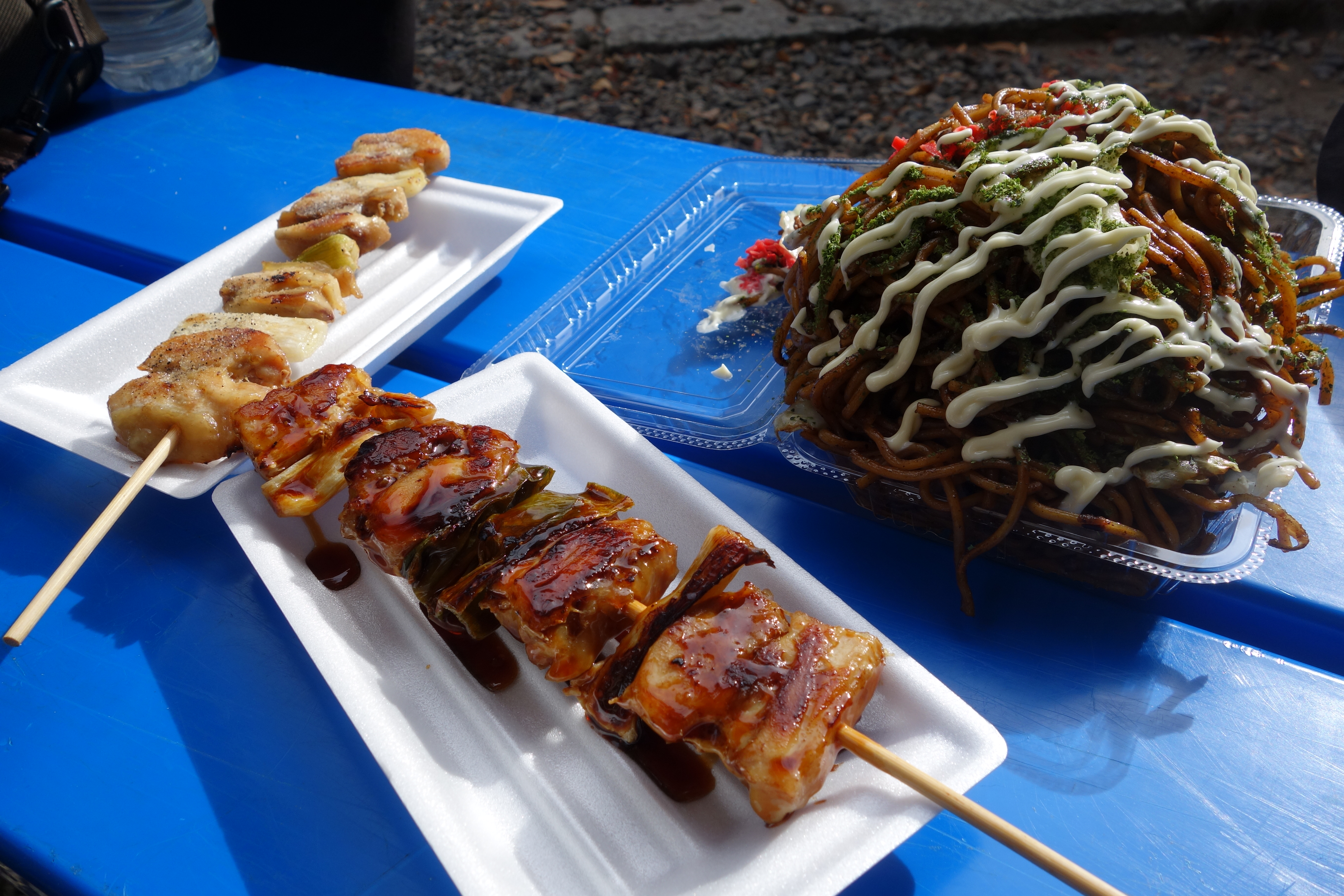
Our first order of business once we arrived at Fushimi Inari was breakfast. There were food stalls near the entrance to the shrine. We decided to have yakisoba and grilled pork.
DSC00110

I expected Fushimi Inari to be grander, but it was pretty low-key. It was also orange, not red. I don’t know why, but I always pictured it to be red.
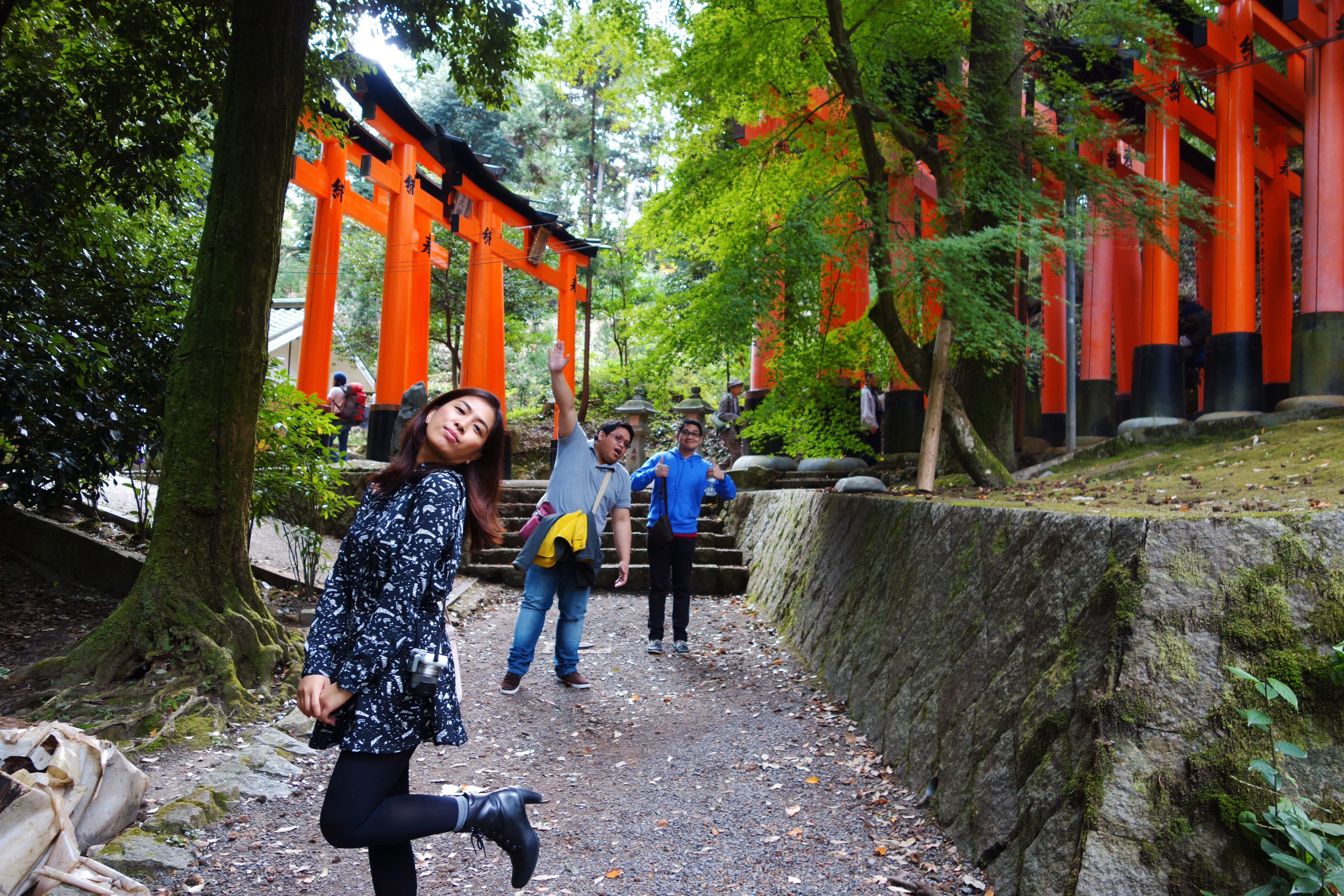
DSC00186

There were a lot of tourists that day, so it was hard to get a photo with the torii without getting photobombed. We did the whole “praying for good luck” thing, and then we went to Kiyomizu-dera by bus.

The bus was another discovery. At stops, the bus tilted on its left side to level with the sidewalk. I think it was for the benefit of disabled people and children. It was pretty cool.

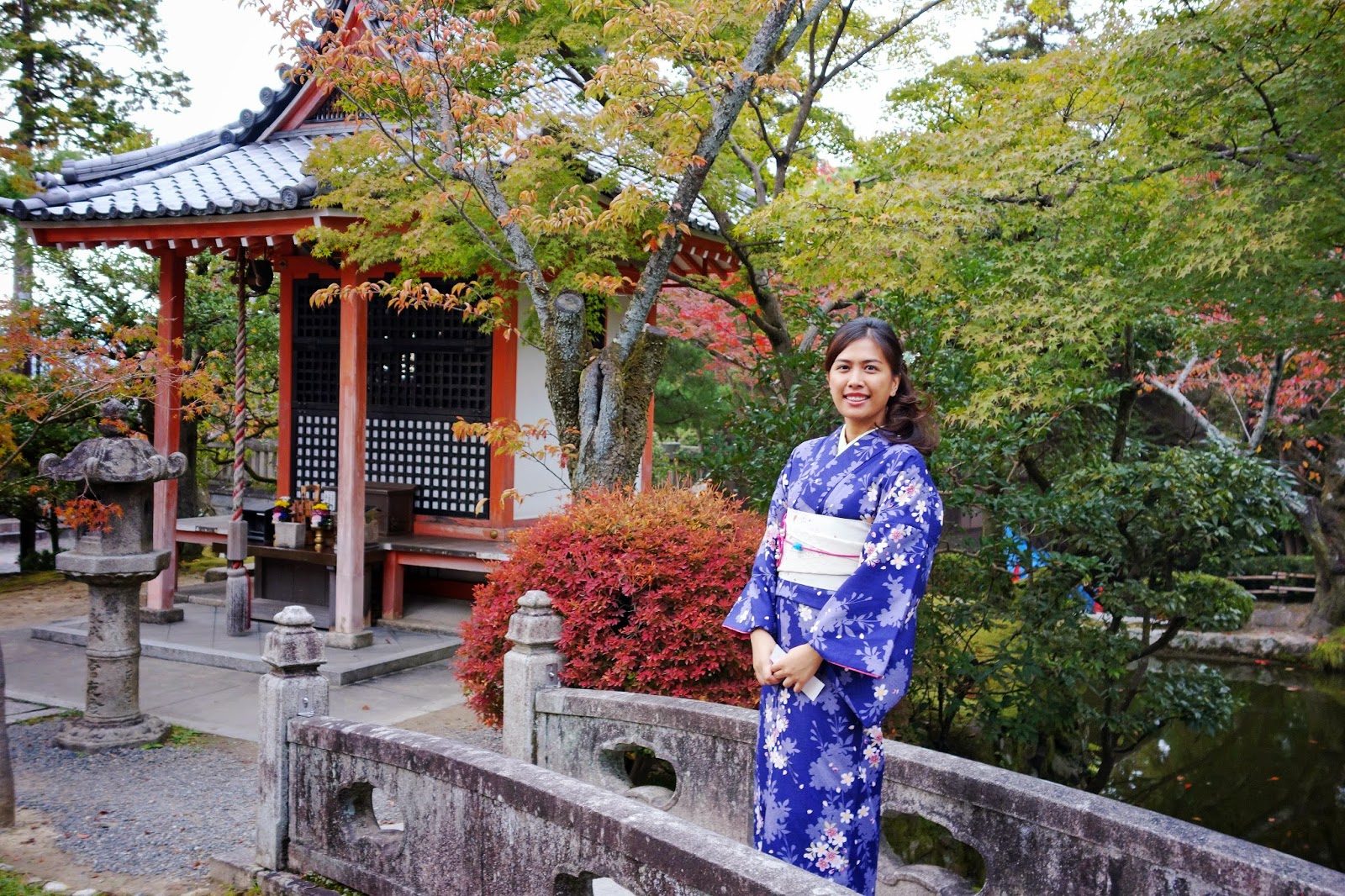
At Kiyomizu-dera, I went to Okamoto, a kimono rental place, while the guys looked for a place to have lunch. I felt pressured to quickly choose a kimono because the attendant kept checking up on me. It would’ve been easy if the only thing I had to worry about was the actual kimono but it had so many elements—the inner lining, obi, accessories. And there were hundreds to choose from. It was a decision I really didn’t want to rush. It had to be perfect.

DSC00277

I wanted something with the color pink, but I also wanted to stand out from the many girls already wearing pink. I chose a purple kimono with pink accents. The inner kimono had a green collar to highlight the green colors of the outer one. My obi was beige with pink accents. They fixed my hair in 10 minutes; the whole process took about 40.

DSC00329

I liked wearing the kimono because it was perfect for the cold weather. The tightness of the obi forced you to stand straight. The narrow hemline forced you to walk with tiny steps. I felt quite feminine. I think the desired silhouette for kimono-wearers is that of a bamboo—straight and narrow. I succeeded at that because my body is already straight even without wearing kimono. The guys enjoyed teasing my kimono-clad self.

We explored Kiyomizu-dera after lunch. The main temple itself was okay. I guess the place didn’t look as impressive because the leaves of the surrounding trees haven’t changed color yet when we arrived. Walking toward the edge of the terrace to join fellow tourists was worrisome, knowing that our collective weight was supported only by thick wooden stilts. Plus, the terrace itself had a slight downward incline.

DSC00442

After changing back to my clothes, we left Kiyomizu-dera.

We rode the correct bus to Kyoto Station, but it went to the opposite direction. (Just like in Korea!) When we realized this, we got off at the next stop. The driver didn’t make us pay for our ride. He was so considerate.

We hung out for a while at Kyoto Station’s rooftop before returning to Osaka, because we enjoyed the cold air whipping our faces. Plus, it had a good view of the Kyoto Tower and the city’s skyline.

DSC00554
Kyoto Station
DSC00539
Kyoto Tower seen from the Kyoto Station observation deck

We were really hungry when we arrived in Dotonbori. It didn’t help that once we stepped off the train platform, the smell of food assaulted our senses. Even if you’re not hungry, your stomach would’ve grumbled in appreciation.
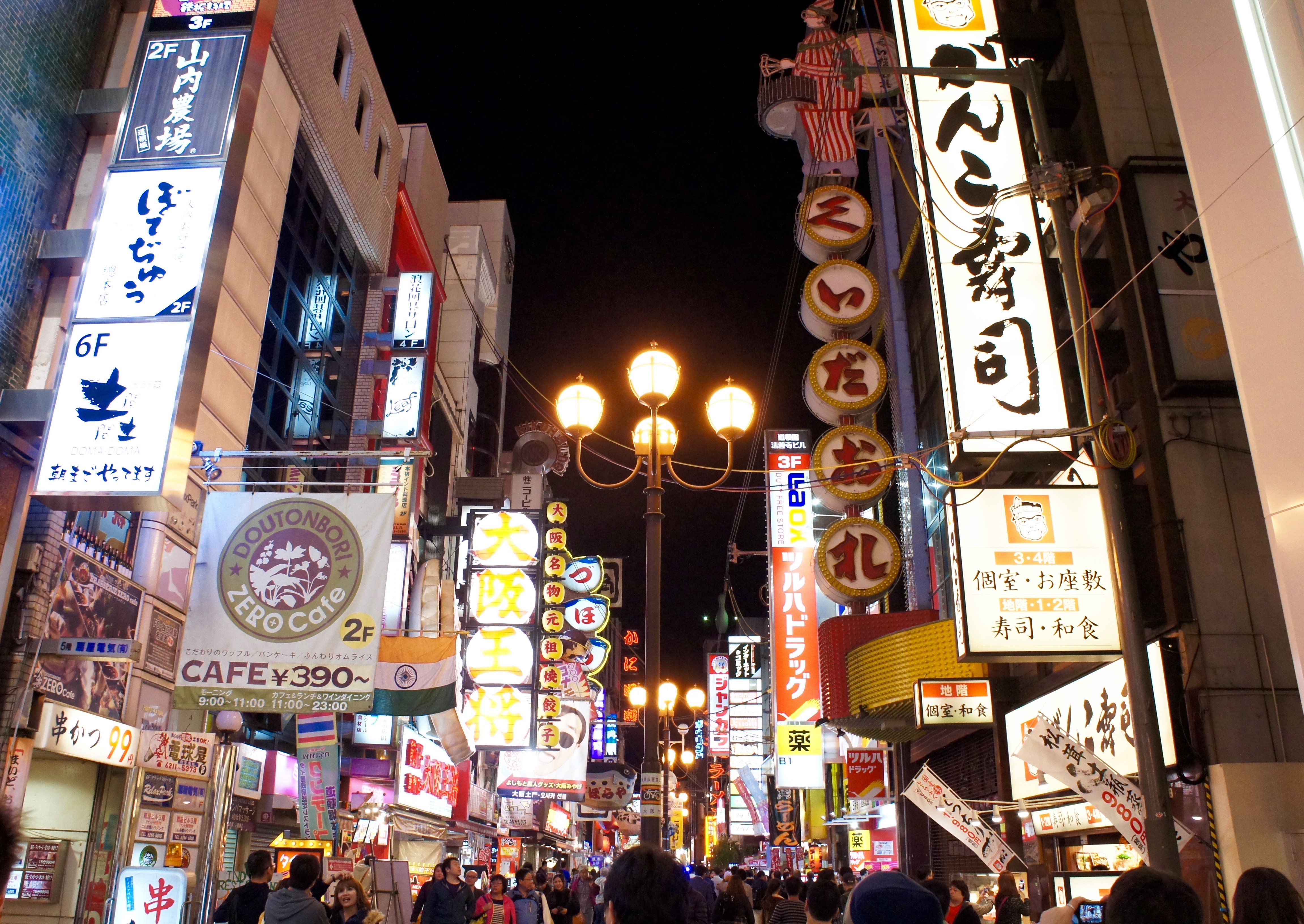
SONY DSC
So many food choices, so little time

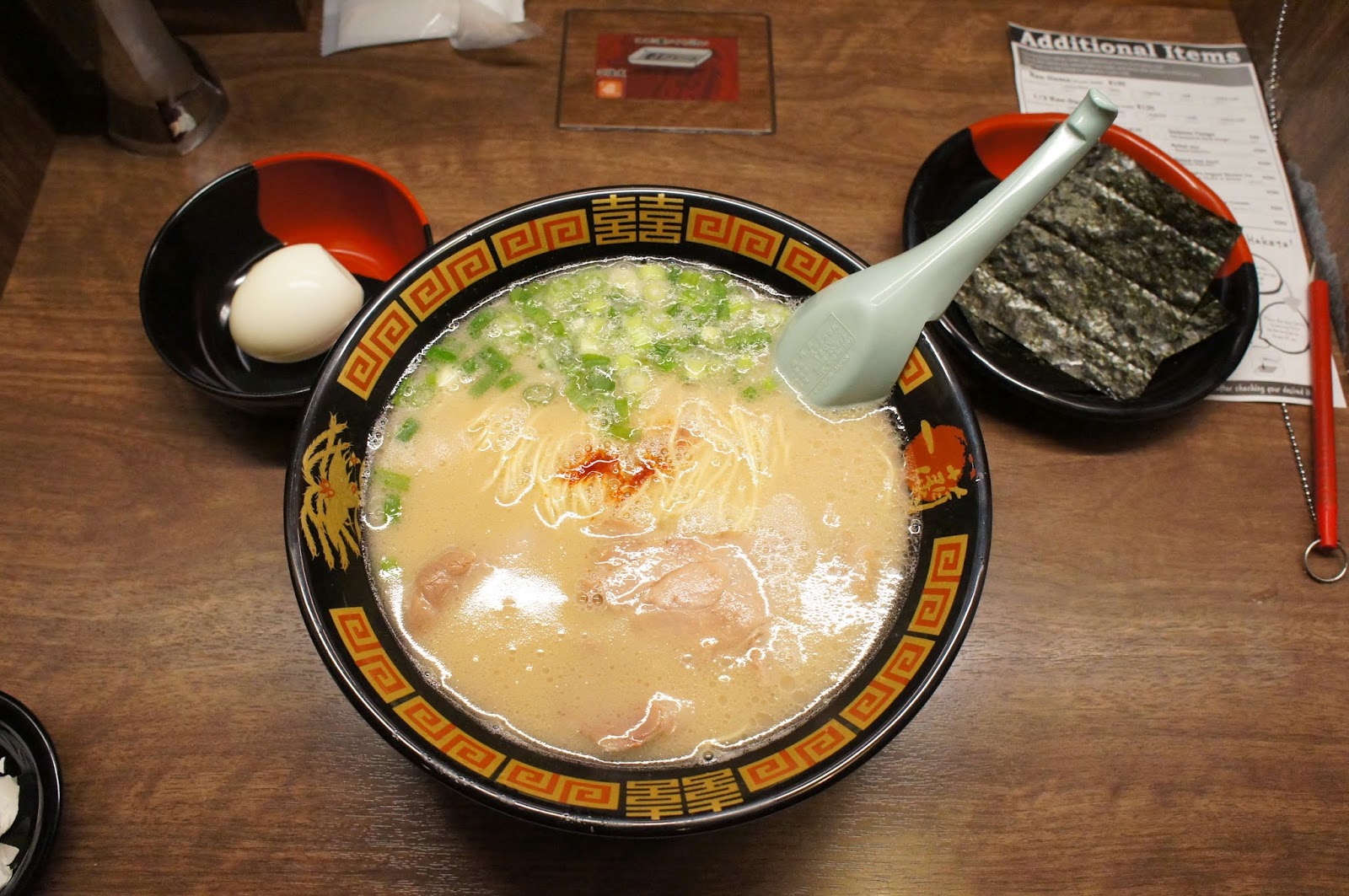
We went to Ichiran to eat ramen, thanks to the suggestion of Ruther’s friend. (God bless his life, his family, and his future grandchildren.) It was monumental—not only because it was the first bowl we had in Japan, but because the ramen itself deserved a monument.
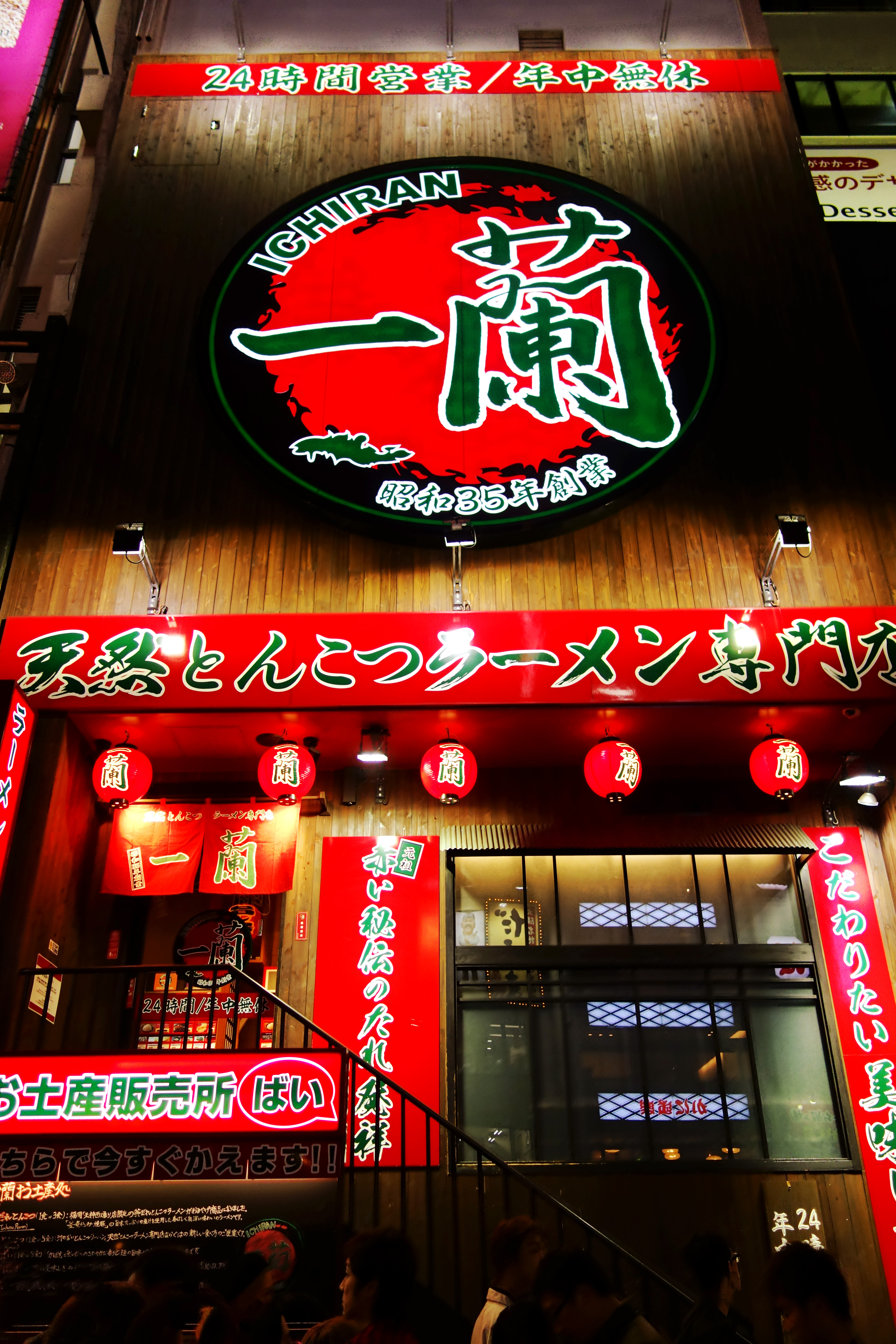
Heaven
Gateway to heaven

It was glorious. The broth really tasted like pork, so much so that I remember it better than the actual chashu. It was the perfect temperature—hot but not scalding. It had a dab of chili paste that enlivens the broth. Not one element of the ramen—from the ajitama to the noodles—outshone the other. It was a bowl of happiness and contentment.

Heaven in a bowl
*Hallelujah chorus plays in the background*

We also enjoyed the place’s cubicle setup. We agreed it was designed that way so that you can foodgasm in the privacy of your own space.

Maybe it was Japan or that we were all there together, but it was the perfect way to end our first day.

The faces of happy, satisfied people

I called my boyfriend after eating at Ichiran because I wanted to share my overflowing happiness with him. He loves ramen more than I do. I will go back to Dotonbori and eat this ramen with him.
It’s never too early to plan for your Japan trip

I’ve always wanted to go to Japan. Every picture of destinations in Japan and every show or movie shot in it makes the country seem like a fascinating place to be in. I’m also curious about the country because I love Japanese food and grew up on anime. I got to live out my Japan travel dreams last November. To all of you guys who also have Japan in your travel bucket list, here are some quick facts about my Japan trip to help you plan yours.

Visa requirements

For Filipinos, the application process for a Japanese tourist visa is pretty straightforward. You only need to submit the requirements through accredited travel agencies. There’s no need to go to the embassy anymore. A round trip plane ticket isn’t one of the required documents so it’s up to you if you want to buy one before or after you apply for a visa. Time your application to your flight because a Japanese tourist visa is only valid for three months. Our visa application at Reli Tours & Travel Agency cost Php 1,200. Results of the application are released a week after submission, at the latest.

When to go

Once you and your travel buddies have decided that you’re going to Japan, one of the first things you have to consider is the timing of your trip. Japan has four seasons. Right now, it’s spring and cherry blossoms are blooming. I haven’t experienced cherry blossom season so if we want to, we still have a whole year to save for it. Let’s prepare our pockets though because this is peak season. Hotel rates and plane tickets could get pricey.

You might want to go during winter to experience snow but consider that you’ll have to buy bulky winter clothes that will occupy a chunk of your storage space and you’ll never be able to use them in the Philippines. You could go in summer but then Philippine summers are much better because of our many beautiful beaches so why bother? My friends and I went on a week-long trip in autumn because we wanted to experience sweater weather without the hassle of dealing with snow.

Where to go

Sensō-ji, Asakusa, Tokyo

Japan is divided into prefectures each with their own thing going on. We wanted to visit so many places like Nara to see a deer up close or Hiroshima for the floating torii or even Hokkaido for the food. And it’s possible to see all these places in the span of a week if you avail of the Japan Rail (JR) Pass.

The JR Pass gives you unlimited access to all JR trains including their shinkansen or bullet train. It’s available for foreign tourists only. You have to buy the ticket in advance through a travel agency and have it exchanged for the actual pass upon arrival in Japan.

We were tempted to buy the pass but we knew we wouldn’t be able to maximize it. Availing the JR Pass would pressure us to see as many sights as possible without actually appreciating them so we decided against it. Plus, it was expensive.

We focused on three cities for our trip instead. We went to Osaka, the nearby Kyoto and then took a one-way shinkansen to Tokyo.

How much do you need

Hogwarts Castle, Universal Studios, Osaka

Another major travel consideration is how much money you’d need for a trip, mainly airfare and accommodation. It’s easy to find cheap plane tickets if you have patience and foresight. Just wait for the many Cebu Pacific seat sales and you could purchase a round trip ticket to Japan for less than Php 10,000. We booked ours for Php 7,900 (USD 180) in one of those piso fare promos in celebration of Labor Day.

Our accommodation of two rooms for six nights cost each of us Php 18,400 (USD 415). To be more specific, that’s Php 4,100 for two nights in Osaka and Php 14,300 for four nights in Tokyo. This sounds expensive but bear in mind that it’s Japan; everything’s more expensive. You could definitely find cheaper accommodation though. There are inns, dormitories and capsule hotels that run at around Php 1,000-1,500 a night. However, you have to share bathrooms with other guests and if I’m not mistaken, some shared bathrooms in Japan don’t have individual stalls. So depending on your traveling style, airfare and one-week accommodation range from Php 20,000 to 30,000.

My friends and I wanted a comfortable trip so we opted to stay in strategically-located hotels with bathrooms all to ourselves. We agreed that our airfare and accommodation should not exceed Php 30,000, so in our minds, we actually saved a few bucks.

Another variable to consider is your pocket money. How much of it you need for your trip will depend on what activities you’ll be doing. If you’ll only be sightseeing, you can have a smaller budget. But if you plan to go to theme parks and ride the shinkansen, that would increase significantly.

The Sorting Hat placed me in House Lannister. Weird.

Most people visit Universal Studios in Osaka especially Potterheads because of the Wizarding World of Harry Potter. A one-day pass at Universal is around Php 2,700 (USD 60). You could save a little if you go for the Universal Express Pass which I recommend if you want to avoid the long lines.

A one-way shinkansen ride from Osaka to Tokyo is around Php 5,500 (USD 125). If you’ll be coming from a different city and want to find out how much a shinkansen trip would cost, you can check out fares here and trip schedules here. The information given in those links can be confusing but you can always ask for bullet train schedules from information counters at train stations. You can also buy your tickets directly from them.

We bought our shinkansen tickets from the information counter on the Universal Studios platform. The receptionist told us which platform we should wait on once we arrive at the Shin-Osaka station. In the vastness of Shin-Osaka, it is highly likely that we might’ve missed our train if not for her directions.

The cheaper way to get to Tokyo from Osaka is by bus. Traveling by bus takes around 8 hours while the shinkansen takes two hours. Buses range in price depending on the type of bus but all of them are cheaper than taking the bullet train.

Food and transportation (excluding shinkansen) for a seven-day trip will cost around Php 10,000 (USD 230). This budget already includes a semi-fancy sushi meal at Tsukiji Fish Market. Of course you can cut down expenses by eating cup noodles and other convenience store food but why the fuck would you do that? Japan has so many delicious things to offer. Eat those things! Scrimp on everything else but not on food.

Where to eat

Since we’re on the topic of food, here are some places where you wouldn’t regret spending your money:

Ramen at Ichiran Ramen, Dotonbori, Osaka – Life-changing!

Sutameshi at Sutameshi Dondon, Shibuya, Tokyo

It’s difficult to find Sutameshi Dondon on Google Maps but you could search for “Napoli’s Pizza & Caffe, Shibuya” and it’s the one beside that. It’s in between Napoli’s and Gaspanic Shibuya. If you’re going to the statue of Hachiko at Shibuya Station, it’s the street across Hachiko.

Omakase at Tsukiji Fish Market, Tokyo – for sushi and sashimi lovers

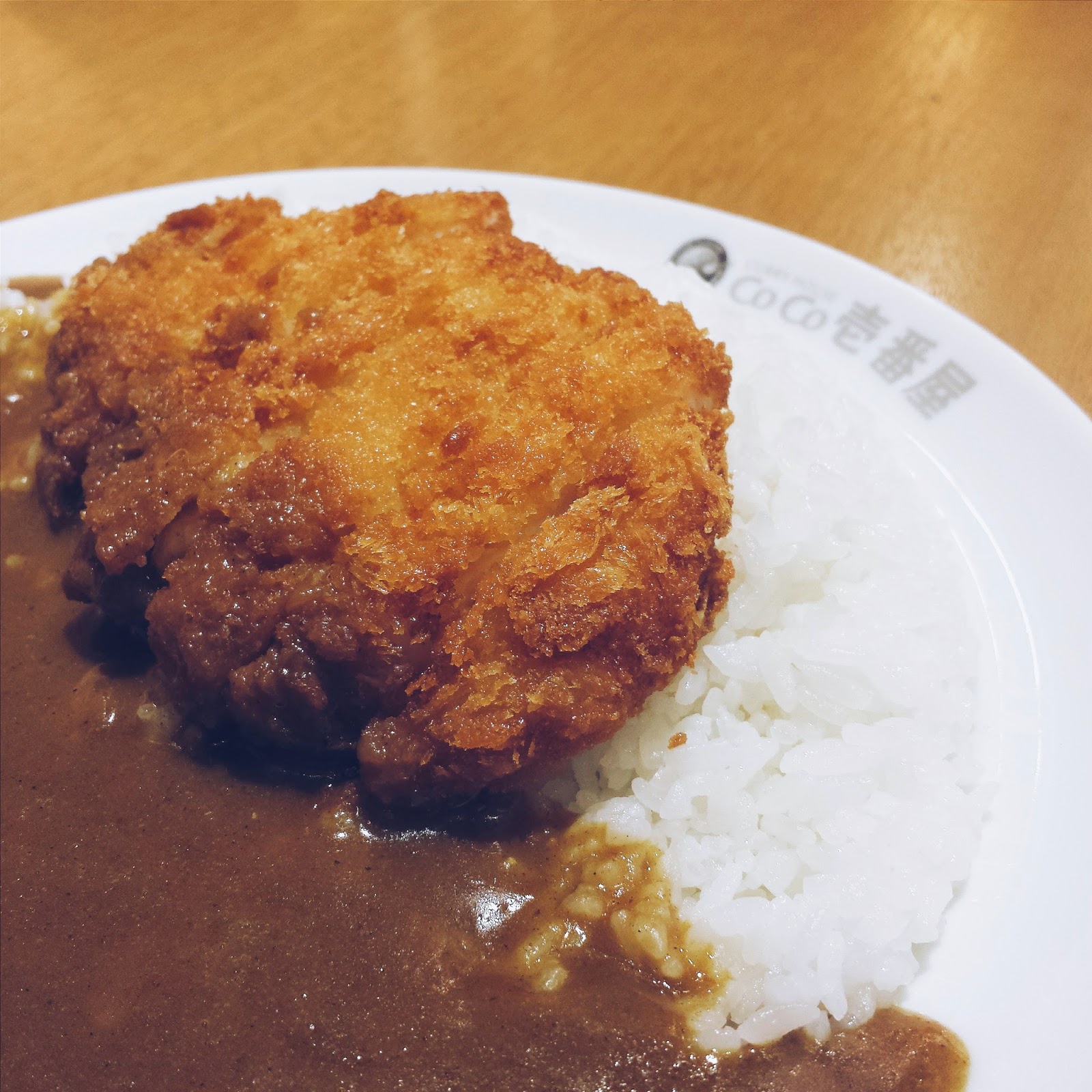
Coco Curry House, various outlets across Japan – My friend will be mad if I don’t include Coco Curry on this list even though there’s already Coco Curry here in Manila.

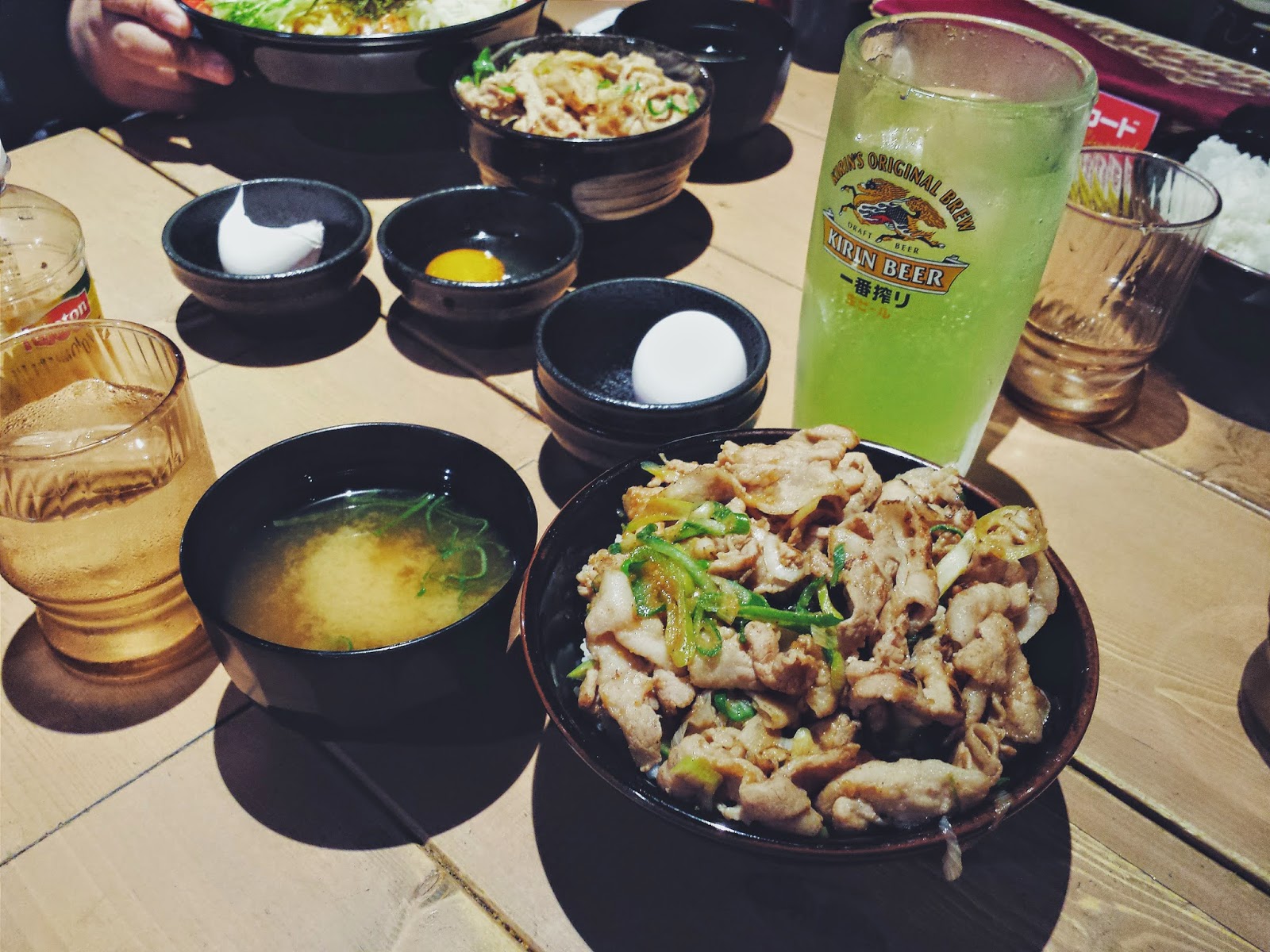
Honestly, it’s hard to have bad food in Japan. Even the yakisoba and chicken karaage that you can buy from food stalls at shrines are good. At worst, you’re going to have boring food. But a bad food experience in Japan is unlikely. Unless you eat natto, I guess.

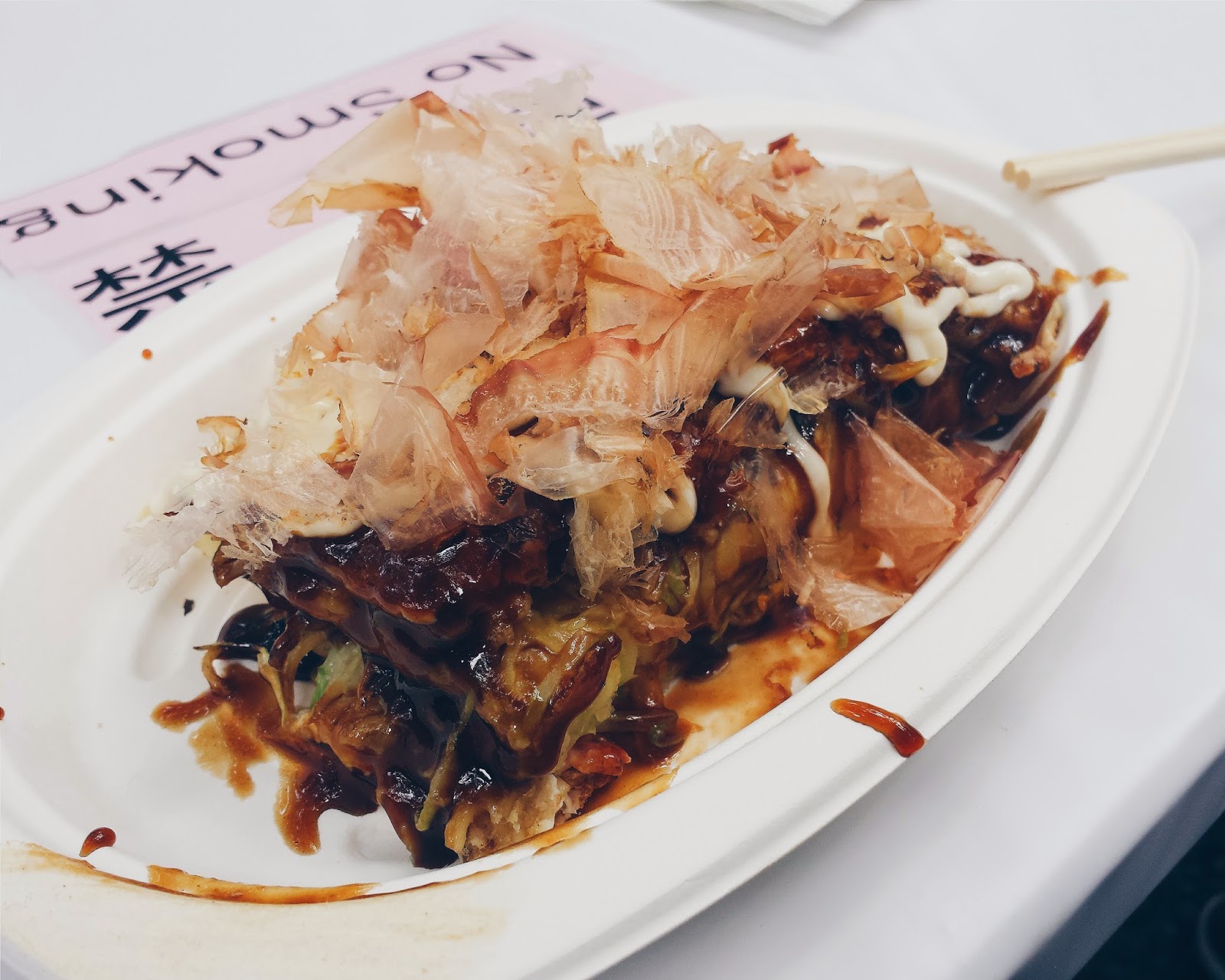
Okonomiyaki!

Where to stay

Hotel Kinki, Osaka

The name of our hotel in Osaka may not be promising and even though it’s located in a red light district, the area doesn’t feel unsafe. Hotel Kinki has clean rooms and is only a ten-minute walk away from Osaka Station.

One of the challenges of traveling is the morning preparation and what I like about the rooms in Hotel Kinki is their toilets and bathrooms are separate. If someone is pooping, the other person doesn’t have to wait for him/her to finish in order to bathe. Also, the sink is outside the shower so one person could brush their teeth while the other person is bathing. It’s a time-saver.

Citadines, Shinjuku, Tokyo

Citadines is an apartment hotel so our rooms were spacious. It had a small kitchen (with utensils!), a desk big enough that you could actually see yourself working on it for a few hours, and comfortable, clean beds. It’s a five-minute walk from the nearest train station which is Shinjuku Sanchome. I have absolutely no complaints on this hotel except that it was expensive. But we were in a central area of Tokyo so it wasn’t much of an issue.

Getting around

Trains and buses are the cheapest and easiest way to travel in Japan. The trains can be a little confusing. We rode the wrong bus and train at least three times. To minimize riding the wrong train, download Japan train apps on your smartphones. They’re incredibly useful.

You can buy postpaid cards to ride buses and trains. When we were researching about them, we learned that there are different cards for different lines or train companies. It was complicated and we didn’t know if we would be able to maximize postpaid cards since we’re going to different prefectures so we decided we’ll just buy a ticket every time we ride a train.

You’ll also need a pocket wi-fi to get around. Aside from posting awesome photos on Instagram, we used it mainly for Google Maps and talking to each other when we split up.

You can rent a pocket wi-fi in Japan on a daily rate. We rented two pocket wi-fi from Pupuru for seven days which cost Php 4,600 (USD 105). You have to purchase Pupuru at least a week before your arrival date. Once they’ve confirmed payment, they will deliver the device directly to your hotel in time for your arrival. There’s no need to worry if you’ll land in one city and leave from another. The cost of Pupuru already covers postage fee, so after your trip, all you need to do is drop the device in any mailbox you can find. The instructions will also be on the package itself.

Those are the basic stuff you need to know in order to prepare for your Japan trip. I know this won’t be the only blog you’ll be reading for tips. We researched a lot, too, when we were planning ours. It’s tedious work but if you want to make the most out of your travel, then it’s worth it.

Here’s some torii at Fushimi Inari-taisha to wish you all the best on your travels.